
Blogs

The Label You Were Given at Eight Is Still Running Your Marriage

"My sensible one"
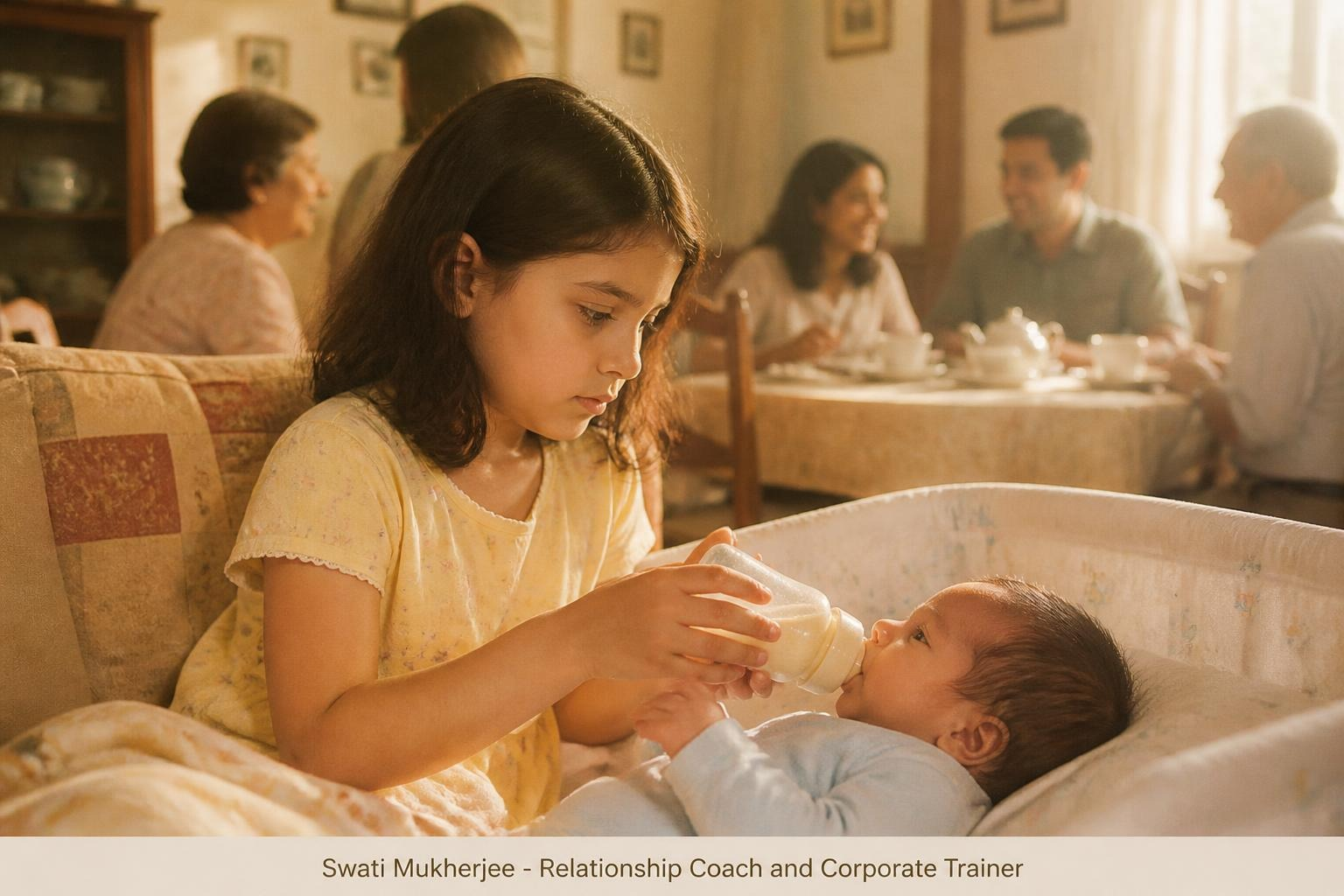
Maya was eight when her brother was born. Her grandmother came to stay, the house filled with visitors, and someone handed Maya a bottle and asked her to watch the baby while the adults ate.
She did it perfectly. She didn't spill anything, and she didn't cry when he cried. That evening she heard her mother say to a neighbor, "Thank God for Maya. She's my sensible one."
Nobody meant anything by it. It was a tired mother being grateful at the end of a long day. But Maya kept that sentence the way children keep things, without knowing she was keeping it. She packed her own school bag from then on, and soon her brother's too. At twelve she was the one who remembered the gas bill. At sixteen she talked her father down when he lost his temper, because someone had to, and it was always going to be the sensible one.
Maya is thirty-eight now. She runs a team of twelve, and she also runs her house. She knows when the car insurance renews, which of Adam's cousins is getting married, and that the boiler needs servicing in November. Last month she sat in her car outside the supermarket for twenty minutes, too tired to go in and too tired to drive home.
When she finally told Adam she was exhausted, he looked genuinely confused. "But you're so good at all of it," he said. "You always have been."
She was. She'd been good at it for thirty years. Nobody, including Maya, had ever asked whether she wanted the job.
Where our labels come from
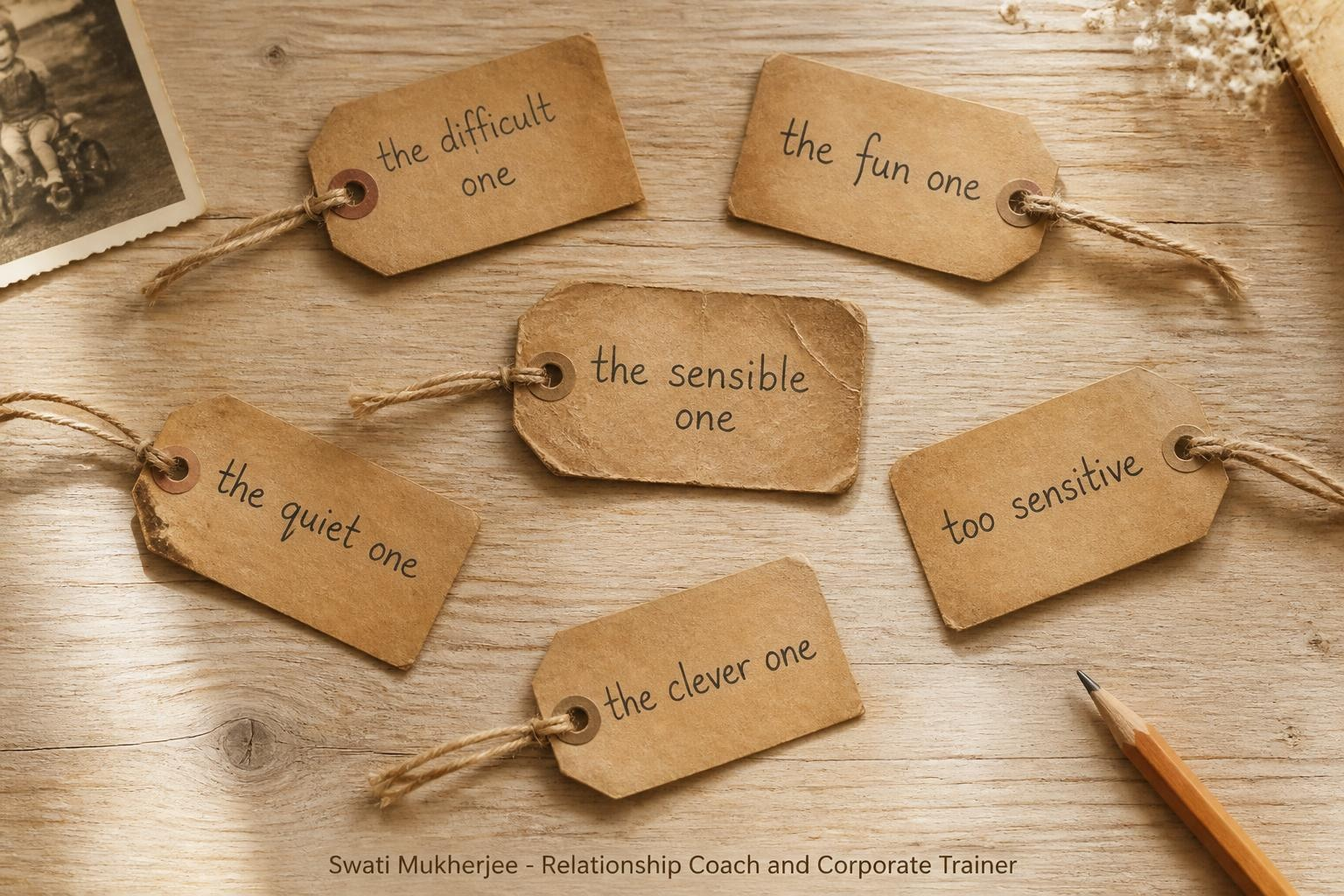
Most of us were handed a label before we were old enough to question it. The responsible one. The difficult one. The clever one, the pretty one, the quiet one, the one who's "too sensitive", the one who "won't amount to much". Sometimes it was said once, in passing, by a parent, a teacher or a grandparent. Sometimes it was repeated at every family gathering until it became the way everyone introduced us.
The adults who gave these labels usually weren't being cruel. Families need shorthand. A busy parent sorting out four children needs to know who can be trusted with the baby and who needs watching near the stairs. The label makes their life simpler.
It makes the child's life simpler too, at first. A label tells you where you fit and what earns approval. Maya learned that being sensible got her thanked, noticed and leaned on. A child called "the difficult one" learns something too: people already expect trouble, so there's little to lose by giving it to them.
The trouble is what happens next. Long after the family that needed the label has changed, we carry on performing it, and we rarely stop to ask whether it was ever true.
Why labels are so hard to shake
In the 1960s, a psychologist called Robert Rosenthal tested every child at a primary school in California. He then told the teachers which pupils the test had picked out as about to bloom academically. In reality, those names had been chosen at random. The children were no different from their classmates.
By the end of the school year, many of the "bloomers" had made bigger gains than the other children. Nothing about them had changed except the label in their teachers' heads. The teachers had smiled at them more, given them more time to answer, and expected more. The children rose to meet what was expected. Researchers now call this the Pygmalion effect.
The same thing works in reverse. A child labelled difficult gets watched more closely and forgiven less. Every small slip confirms what everyone already believed, and the child learns that this is simply who they are.
Decades later, Carol Dweck at Columbia found something similar with praise. She gave children a set of puzzles and praised one group for being clever and the other for working hard. When offered a choice of what to try next, many of the children called clever chose the easier puzzles. They had a label to protect, and a harder puzzle might prove it wrong. The children praised for effort were more willing to try something difficult.
Taken together, the two studies show a label doing two jobs at once. It shapes how other people treat us, and it shapes what we're willing to risk. Even a flattering label can become a cage. Maya never failed at being sensible, so she never had a reason to stop.
When two labels get married

Adam was the youngest of three. In his family he was "the fun one", which was a kind way of saying the one nobody expected much from. His older sisters organized the birthdays. His mother filled in his forms. When he forgot something, everyone laughed and said, "That's Adam."
When Maya and Adam met, they fitted together beautifully. She loved how relaxed he was. He loved how capable she was. Neither of them noticed that each of them had found the person who would let them keep playing their childhood part.
This happens far more often than people realize. We rarely choose a partner at random. We tend to be drawn to someone whose role completes our own. The responsible one and the carefree one. The rescuer and the one who needs rescuing. The peacekeeper and the one with the temper. For a while it feels like being understood.
Then the labels start to rub. Maya began to resent doing everything. Adam began to resent being treated like a teenager. When she finally snapped about the forgotten anniversary dinner booking, he said, "You never let me do anything anyway. You redo it all." She said, "Because if I don't, it doesn't get done."
They were both right. That's what made the argument impossible to win. Maya was performing "the sensible one" and Adam was performing "the fun one", and each performance kept the other one going. Every time she stepped in, he stepped back. Every time he stepped back, she stepped in. The dinner booking was just the latest scene in two parts written for them before either of them was ten.
How to put a label down
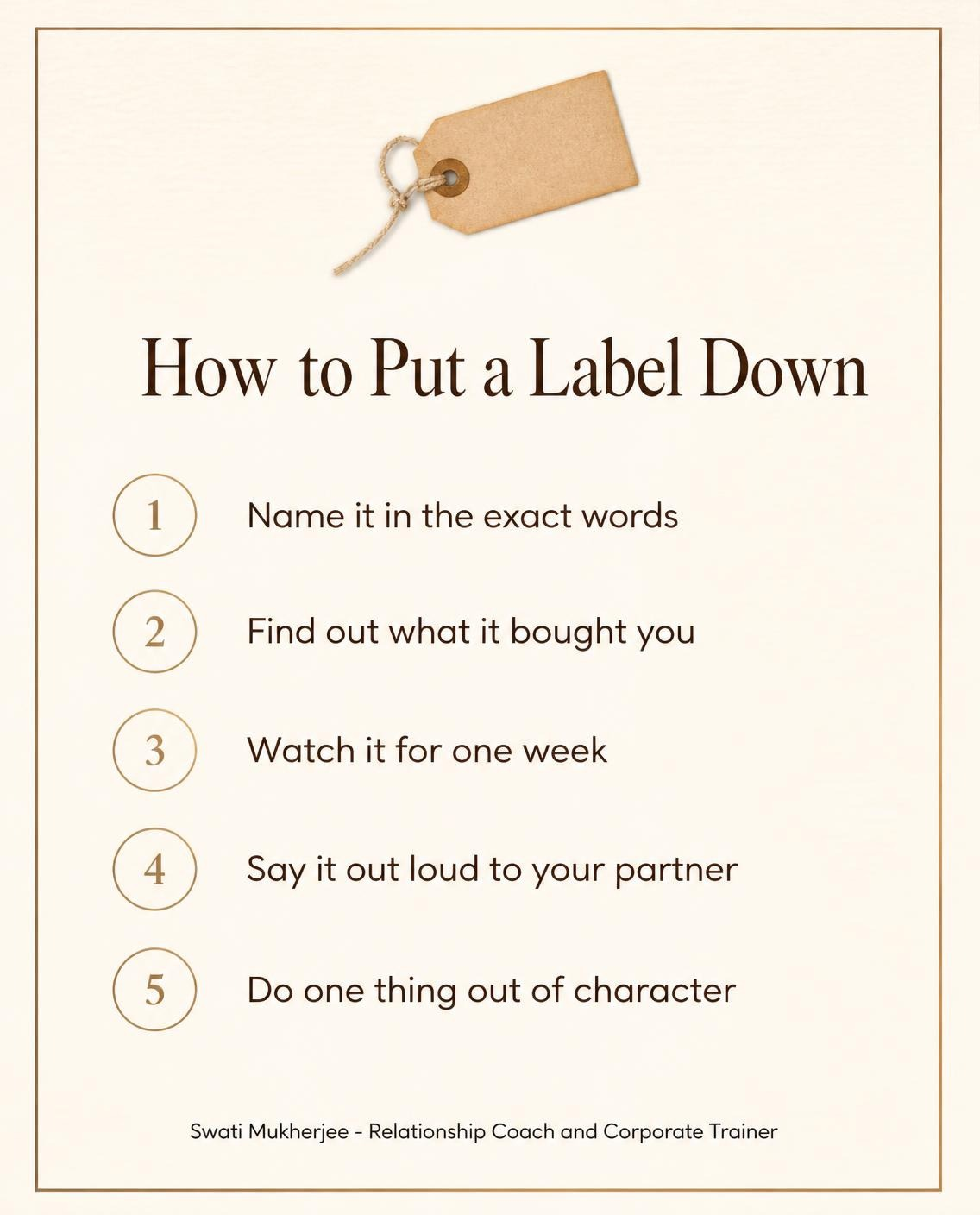
A label that's been with you for thirty years won't disappear because you've noticed it. What you can do is stop obeying it automatically. These are the five steps I take couples through, in this order.
1. Name it in the exact words
Write down the label as it was said to you. "Sensible" is more useful than "I'm a bit of a control freak", because the exact word takes you back to the moment it was given. If you have more than one, start with the one you hear in your head when you're tired.
2. Find out what it bought you
Every label stuck because it paid something. For Maya it was being thanked and relied on in a house where attention was scarce. For Adam it was being let off. Ask yourself what you got for playing your part, because that payment is what makes it so hard to stop.
3. Watch it for one week
For seven days, notice every time you act from the label. Don't try to change anything yet. Maya counted fourteen times in one week when she took over a job Adam had already started. Most people are shocked by how often it happens.
4. Say it out loud to your partner
This is the hardest step and the one that changes the most. Tell your partner what the label is, who gave it to you and what it costs you now. Then ask them about theirs. Couples who do this usually see, often for the first time, how their two labels have been holding each other in place.
5. Do one thing out of character
Pick one small, specific thing your label would never allow. The sensible one leaves a job undone and lets someone else notice. The fun one takes something over completely, start to finish, without being reminded. Expect it to feel wrong. Discomfort usually means the old part is being stepped out of, which is the point.
One more thing, for anyone with children. Listen to the labels you're handing out. "He's my little troublemaker" and "she's the brainy one" are said with love, and they land the same way Maya's did.
What Maya did next

Maya's out-of-character thing was the family holiday. Every year she researched it, booked it, packed for it and briefed everyone on it. This year she told Adam it was his, all of it, and that she wouldn't check.
She checked twice in the first week, and caught herself both times. Adam booked a place she wouldn't have chosen, with a ferry she thought was a terrible idea. He also rang his sister and asked her how she organized her family's trips, something Maya had never seen him do in eleven years.
The holiday wasn't perfect. The ferry was late, and Maya bit her tongue for a full forty minutes on the dock. But somewhere on the second day, Adam said something that made her put her book down. "I didn't know I could do this," he said. "Everyone always just did it for me."
She realized that her label had been costing him too. Every time she was the sensible one, he got to stay the boy nobody trusted with anything. Putting hers down gave him room to put his down as well.
She still knows when the boiler needs servicing. Some things don't leave you. These days she's starting to tell the difference between what she does because it needs doing and what she does because she was eight once, and someone needed her to be sensible.
If you and your partner keep having the same argument about who does what, there's a good chance two old labels are doing the arguing. The 31-Day Relationship Reset gives you a short daily practice for noticing the pattern and changing your part in it. If you'd rather work through it with me directly, book a private consultation and we'll find out which parts you've both been playing.

Handcrafted by Coach Foundation | Copyright © 2023 Swati Mukherjee's Coaching. All Rights Reserved.