
Blogs
What Remains After They Are Gone
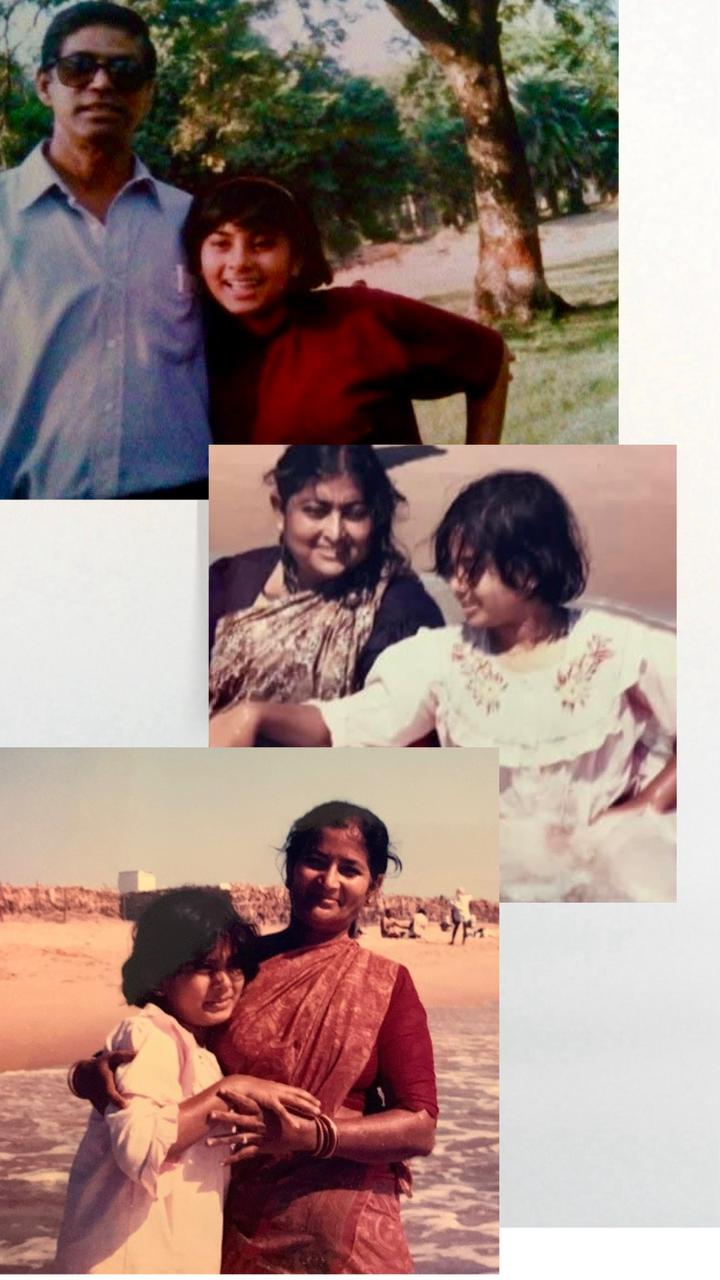
As I kept looking at the screen, trying to find words to express what I am feeling right now, I realized words probably cannot express this. So I thought I would tell you a story instead.
But where should the story start?
Should it start with what is happening right now? Should it start with my childhood? Or should I go even further back?
This story starts somewhere in the 1970s. Long before I was born. Long before I was even a possibility.
A few days ago, I was telling my husband yet another story about my mother and the impact she had on my life. He casually observed, “You don’t talk much about your father.”
I said, “Yeah, obviously. I don’t know my father.”
I have five memories of him. Maybe ten or fifteen stories I’ve heard from my mom, and a few from others. The stories were always from their point of view. I didn’t know the man at all.
I don’t remember any conversations with him.
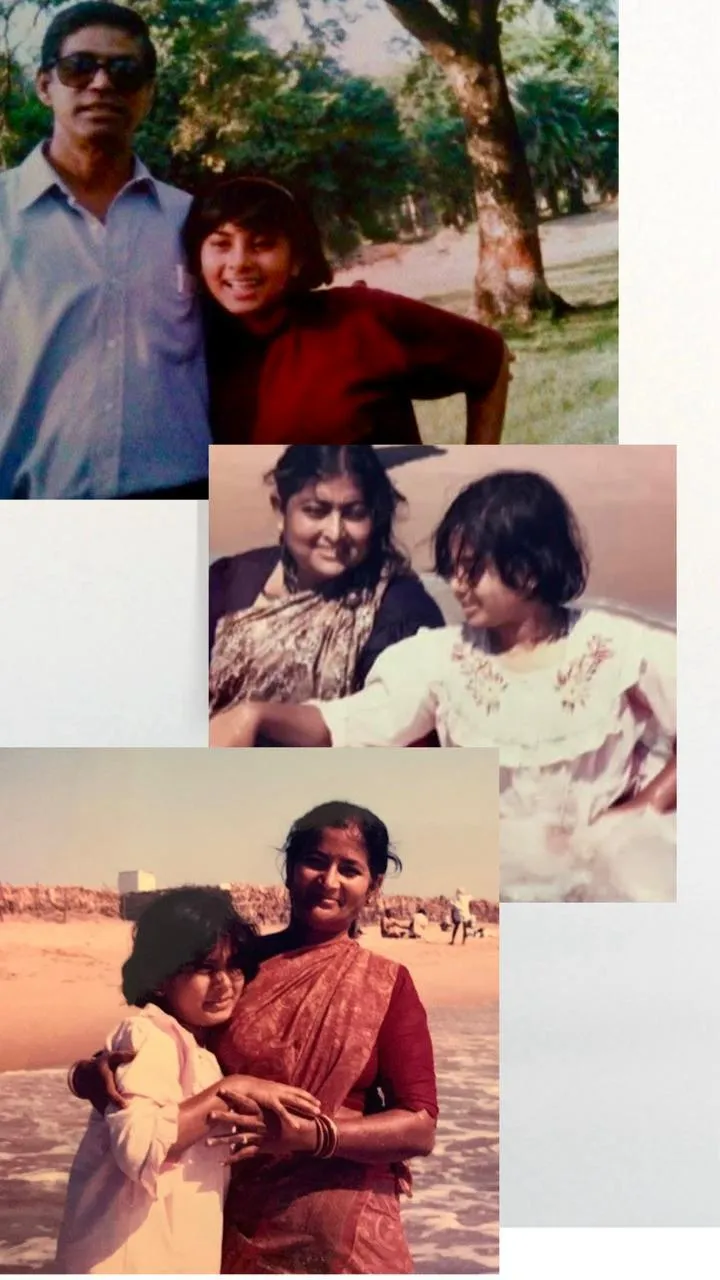
I remember the feeling of love. I remember the pain I felt when he passed away from cancer. I was seven years old. Barely able to process complex emotions. Barely aware of the lasting impact it would have on my life.
After losing my father, my mother raised me.
I had an elder brother who was my world at one point. But I don’t want to go there. It’s complex. And I don’t want to dwell on what doesn’t work. I would rather hope he is happy, that he does not suffer, and move forward with my life.
But there were a few other people who stood by me every step of the way.
My mom was a pillar. The other two were my Pishi, my father’s youngest sister, and my Pishomoshai, her husband and my dad’s best friend. I have two sisters, though cousins, they always were more important to me than I can express. They know that, and I think that is all that matters.
There are several other people who had a hand in shaping my story, but this story is not about them. This story is about the 3 parental pillars had in my life. My Ma- Pishi and Pishomoshai.
So that is where I want to begin this story. I don’t know how much I am missing, because I have only heard bits and pieces. But let me try to reconstruct what I know.
My father moved from Kolkata to Bhilai for work at the Bhilai Steel Plant. That is where he met my Pishomoshai. They became friends quickly. When they both settled down and started talking about marriage, my father asked him if he would consider marrying his sister.
In those times, arranged marriages were the norm in India. He agreed without even seeing her once.
My parents’ story was a little different.
My mother was studying in Raipur for her graduation. She lived with her younger brother and her aunt. Her family, my grandparents and her other siblings, lived in a small village called Arang, about 50 kilometres from Raipur. She was the eldest of six siblings.
Those times were different. My father was the fourth of eight siblings.
During a college break, my mother visited her cousin in Bhilai. That is where my father first saw her. He spoke to her brother, and very quickly, the marriage was arranged.
There was a ten-year age gap. In those times, that too was normal.
No one asked my mother if she wanted to get married. She was told she had to. And she agreed, because she was the eldest daughter.
But she was always a rebel.
Because she never had a choice, she made sure her daughter always would. That her daughter would be independent. That she would be able to take her own decisions in life.
This is where the story begins. With the marriages of my parents, and of my aunt and uncle, in the same year.
In the early 1970s, my brother was born. My mother was 19.
Twelve years later, I showed up.
And then, in 1993, when I was seven years old, my father fell sick. He was diagnosed with last-stage cancer, and before anyone could fully understand what was happening, he was gone.
My mother was barely 40.
At seven, I thought a 40-year-old should have everything figured out. She should know what to do. She should know how to handle two children, one seven-year-old and one nineteen-year-old.
Now, as I get closer to 40, I see it differently.
She was in an impossible situation. She was grieving. She was in pain. And she was doing her best to hold everything together, especially financially.
We had no money. We didn’t know how to survive. A few people stepped in and helped as much as they could. It wasn’t just about money. It was the logistics of living.
We didn’t have a vehicle. I was too young. My brother, at least in the beginning, was unequipped to handle everything.
We don’t talk about these things, because we think they are simple.
They are not.
Running to the bank. Going to the post office every month. Paying electricity and water bills. Getting food on the table.
There is so much we don’t notice because we take it for granted.
My life was shaped by three adults.
My mother. My Pishi. My Pishomoshai.
Without them, my life would have been very different.
We all have a negativity bias. We remember what went wrong. We dwell on it.
But today, I want to remember differently.
Every time my Pishomoshai went to the market, he would stop by and ask what we needed. Then he would help us get it.
My mother was very proud. She managed money carefully. She made sure we survived within what we had. She didn’t take handouts.
Sometimes she borrowed. But to the best of my knowledge, she returned everything.
That is one thing I learned. Never take handouts, even from people who are very close.
More than money, it was about presence.
This was before the internet. Before phones were common. You couldn’t just call and have things delivered.
You had to go to the vegetable market. The fish market. Find the freshest produce at the best price.
Pishomoshai taught me that.
He taught me many life skills I didn’t even realise I was learning at the time.
In my father’s absence, he stepped in. He took care of us.
As I grew up, my relationships with them were not always easy.
I was a rebel. I wanted to carve my own path. I wanted to do things on my own terms.
Some of their views, I didn’t agree with. Some of my choices, they didn’t agree with.
But in hindsight, I see something clearly.
Some people focus only on what went wrong.
Others understand that nothing is perfect. That you take things as they come. And you hold on to what truly matters.
What mattered was this.
They stood by my mother. Through everything.
For that, I can never be grateful enough.
Memories are tricky. They are selective.
We remember the fights more vividly.
But I also remember the quiet evenings.
Evenings where a simple samosa-jalebi snack meant more than food.
It meant being wanted. Being loved. Being part of something.
Today, we miss that.
Or maybe we are too busy to build relationships that go deeper than the surface.
We are connected all the time, and yet disconnected in reality.
We see curated versions of each other’s lives and mistake them for truth.
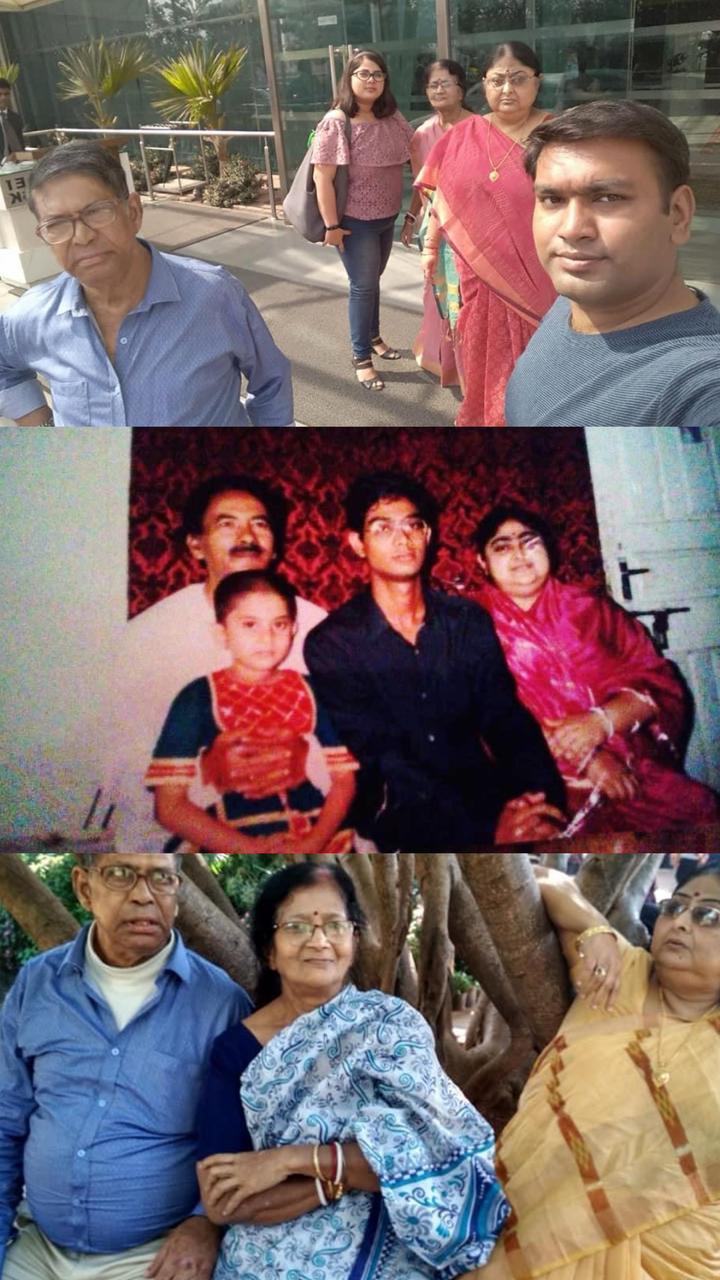
In 2015, my Pishi and Pishomoshai visited me and my mother in Pune.
It was a proud moment for me.
I had started building my life. I was independent, just as my mother wanted. I was living in a 2BHK where they could come and stay with me.
This was before I got married. And I was glad they believed in me.
The road to that life was not simple.
In college, there were days I didn’t have money for the bus. Days I didn’t have money for food.
I struggled. But I didn’t give up.
My mother stood by me. Even when I struggled to find a suitable job, she never asked me to come back home, even though many people suggested it.
I realise now that people often suggest what they themselves would do in that situation.
At that time, a quote by Dumbledore comes to mind.
“It is our choices that show what we truly are, far more than our abilities.”
My choice was to fight. Every time.
And that choice came from the strength my mother gave me.
She never told me what to do. She gave me the freedom to choose. She supported me in whatever way she could.
And I did my part.
I worked through my graduation and post-graduation. There were times I felt I couldn’t go on. But I knew I had to. Because my mother was depending on me.
Yes, I built a life for myself.
I proved myself professionally. I got married. I created stability. I have new goals now, new horizons that I am chasing, from the corporate world to building something of my own. From India to London. Starting from scratch again. And just when I felt I was finding my rhythm, I felt lost again.
But this story is not about my professional life.
This is about something else.
This is about gratitude.
We lost my Pishi in 2021 to a freak fire accident.
It was painful. Very painful.
I missed her. I wished for more time. I wished I had asked her for more recipes. I wished I had told her what her quiet strength meant to me.
I wished I had told her how much I admired her.
Then, in 2023, we lost my mother.
This pain was indescribable.
It took me months to even open that box of pain and take a look inside.
And three years later, just when I felt I was beginning to process it all, we lost my Pishomoshai yesterday.
A month before my planned visit.
We had made so many plans. To spend time together. To go out for no reason. To talk through the night if we couldn’t sleep.
Every time I spoke to him, he would ask, “When are you coming?”
After my mother passed, I called him almost every day.
He was the last parental figure I had.
One of the few people who genuinely celebrated my wins. One of the few who believed in me. One of the few who always had my back.
I cannot explain what he meant to me.
No one really can.
But this is not about explaining.
This is about what I feel. And what I cannot fully express.
This is about giving context to a kind of pain that doesn’t always have words.
And today, 20th March, is my Pishi’s birthday.
I am not a religious person. But I hope they are all together somewhere.
Maybe cutting a cake right now. Celebrating her birthday. Celebrating being together again. And maybe, just maybe, looking at us and smiling.
Knowing they prepared us well.
Knowing they gave us everything they could.
And knowing how deeply they are loved.
Handcrafted by Coach Foundation | Copyright © 2023 Swati Mukherjee's Coaching. All Rights Reserved.