
Blogs

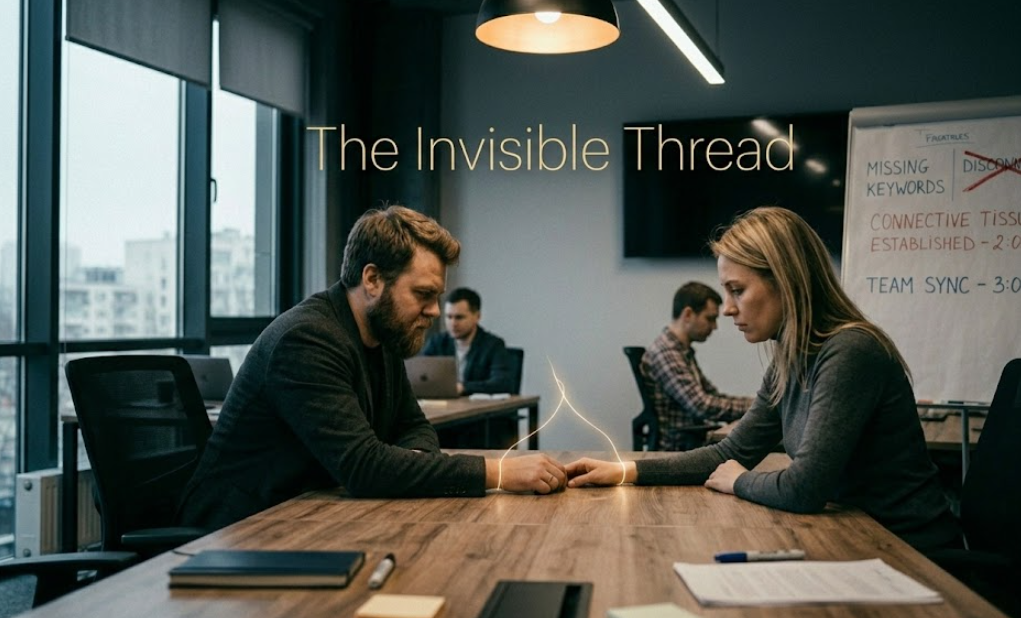
The Invisible Thread: Why Corporate Relationships Are the Foundation We Keep Forgetting to Build
The Invisible Thread: Why Corporate Relationships Are the Foundation We Keep Forgetting to Build
By Swati Mukherjee | Relationship Coach

A Monday Morning That Told the Whole Story
A few months ago, I got a call from Claire, an HR Manager at a mid-sized tech company. She wasn't calling because something had gone dramatically wrong. She was calling because something quietly didn't feel right — and she couldn't put her finger on it.
She had just reviewed her quarterly engagement survey. The numbers were decent — productivity was up, deadlines were being met, revenue targets hit. On paper, the company was doing well.
But three high-performers had quietly submitted their resignations in the last two months. A cross-functional project had collapsed not because of technical failures, but because two teams simply refused to communicate with each other. And in the open-plan office, people sat two feet apart from each other, heads buried in screens, barely exchanging a word beyond what Slack demanded.
"We've built a great company," she told me. "So why does it feel like we're all strangers?"
That question is one I've heard more times than I can count. And every time, it points to the same thing.

What I Saw That the Data Didn't Show
When I walked into their office, I didn't ask to see the KPIs. I asked to sit in a team meeting.
Within an hour, I spotted it — the invisible thread that was fraying.
People interrupted each other without realizing it. A junior team member had a brilliant idea but deflected with "it's probably nothing." The manager nodded but was clearly already thinking about the next agenda item. Two colleagues exchanged a look when a third person spoke — a micro-dismissal that lasted half a second but everyone in the room felt.
Nothing dramatic. No shouting, no conflict, no HR incident. Just… distance.
"This isn't a performance problem," I told Claire afterwards. "It's a relationship problem."
She paused. Then said, "I think I've known that for a while. I just didn't know what to do with it."
That moment — that pause — is where this work begins.
The Thing We Got Wrong About Work
Somewhere along the way, corporate culture bought into a convenient myth — that professionalism means keeping it impersonal. That emotions belong at home. That if you're hitting your numbers, the relationship between you and your colleague is irrelevant.
We built performance review systems, OKR frameworks, productivity dashboards. We invested in tools, technology, and processes. We tracked everything — except the quality of how people actually related to one another.
And the cost of that blind spot? Enormous.
In my years of working with organizations, I have seen the same pattern repeat across industries and company sizes. Employees don't leave companies — they leave managers. They don't disengage from work — they disengage from people. Innovation doesn't die in strategy decks — it dies in rooms where people don't feel safe enough to speak up.
The relationship fabric of an organization is the operating system everything else runs on. And most companies aren't even aware it exists until it crashes.
What "Corporate Relationships" Actually Means
This is usually where someone in the room raises an eyebrow. Are we turning the office into a therapy session?
No. And I'm glad when people ask, because it gives me a chance to be clear.
Corporate relationships are simply the quality of human connection between people at work — how trust is built (or broken) between a manager and their team, how psychological safety allows people to take risks and share ideas, how conflict gets navigated without leaving invisible wounds, how a new employee feels welcomed or ignored in those first critical weeks, how two departments collaborate — or quietly sabotage each other.
These relationships are happening whether you manage them or not. The question is whether they're working for the organization — or quietly working against it.
Why We Don't Pay Attention — And Why That Has to Change
Claire knew exactly why this had been overlooked in her company. Relationships are messy. They're subjective. You can't put them in a spreadsheet. When the quarterly review comes around, no one is asking "how is the trust level between the product and engineering teams?" They're asking about delivery timelines and burn rates.
I understand that tension. I work within it every day.
But here's what the data quietly keeps telling us: organizations with high-trust relationships outperform those without them. Teams where people feel genuinely heard make fewer errors. Managers who invest in one-on-one connection retain their people longer. Diverse teams that have built relational bridges actually leverage their diversity — instead of just tolerating it.
We are leaving enormous value on the table by treating the human dimension of work as a soft afterthought rather than a strategic priority.

What Changed When We Started to Do the Work
After my assessment, Claire and I didn't roll out a mandatory "team bonding" day or plaster the walls with values posters. We did something quieter and more deliberate.
We started with the managers. I ran a series of sessions focused not on leadership techniques, but on how each manager actually listened — how they responded when someone came to them with a problem, and whether they were creating the kind of relational safety that allowed honest conversation. Small shifts made a visible difference. A manager who used to dismiss concerns started saying "tell me more about that." That one change began shifting the dynamic across their entire team.
We introduced structured check-ins that weren't about project status but about how people were doing. Not performative wellness theatre — real, brief, human moments.
And then there was the cross-functional tension I had spotted on that first day. Rather than restructuring the teams, I brought the two team leads together for a facilitated conversation about what had actually gone wrong between them. It turned out to be a six-month-old misunderstanding that had quietly calcified into mutual distrust. One conversation — held well, with the right container — dissolved what months of project management tools had failed to fix.
Six months later, Claire ran the engagement survey again. Productivity hadn't dropped. But something more important had shifted — people were staying. The resignation rate had slowed. The cross-functional projects were delivering. And in the open-plan office, you could actually hear people laugh.
Why I Do This Work
People often ask me — isn't relationship coaching for couples?
I smile every time. Because my answer is always the same: every meaningful outcome in an organization happens through relationship. Helping people do that better isn't a luxury. It's infrastructure.
What I bring into a corporate setting is a specific, trained lens on the human dimension of work. I help leaders understand their own relational patterns — how they show up under pressure, whether they listen to respond or listen to understand, how they handle rupture and repair in their teams. I help groups name and work through the undercurrents that everyone feels but no one talks about. I facilitate the difficult conversations that, left unmanaged, quietly poison a team's culture for months or even years.
I am not a therapist. I am not a consultant telling you to restructure. I work at the intersection of human connection and organizational performance — and I have seen, again and again, that when you invest in that intersection, everything else gets better.
The Question Worth Sitting With
Whether you are an HR professional staring at your own version of Claire's survey, a manager sensing that something is off in your team, or a leader trying to understand why your capable, talented people are underperforming — I want to leave you with this:
What is the quality of relationship in your organization, and are you paying it the attention it deserves?
Not as an HR initiative. Not as a values statement on the wall. But as a genuine, daily practice of building the human connections that everything else — performance, innovation, culture, retention — depends on.
The invisible thread is there in every organization. It either holds people together, or slowly unravels everything you're building.
The good news? You can choose to tend to it.
And it starts with a single honest conversation.

I work with organizations and leaders who want to take the relationship dimension of their work seriously — through coaching, facilitated conversations, and leadership development. If any part of this resonated, I'd love to connect.

Handcrafted by Coach Foundation | Copyright © 2023 Swati Mukherjee's Coaching. All Rights Reserved.